
What makes sourdough different from any other dough? As it turns out, EVERYTHING! While modern cooking techniques have streamlined the timeline for baking bread with the advent of instant or rapid yeast, allowing for baking of bread from start to finish in about 2-3 hours, transitioning away from slow fermentation has some negative impacts and loses some of the art of bread baking.
In slow fermentation, like with sourdough, no yeast is added to the dough. Instead, natural yeast in the air slowly interacts with the flour and water and performs a slower rising (fermentation) process. This slower fermentation not only enhances flavor (and is responsible for the tangy sourdough flavor you have grown to love), but it also allows the structure of the flour proteins to develop differently.
Because of the slower fermentation, the wheat grains are more readily able to be processed and digested by our own bodies, making the sensitivity to wheat (like bloating or IBS) less prominent or eliminated altogether. Like whaaaaatttt?! Furthermore, when using fresh-milled flour from whole grains (I use hard red wheat), you get back the nutritional benefits that are present in the bran and wheat germ that get stripped and bleached in commercial flour preparation.
From start to finish, a loaf of sourdough takes about 2.5 days. It’s not a quick bread you decide to make on a whim – it takes planning and preparation to bring that artisan goodness from my kitchen to yours! First, I have to make sure I have an active sourdough starter, where the yeast is alive and thriving and makes everything all bubbly. If I want to have bread available in my farmstand on, say, a Wednesday morning, I must feed my starter Sunday evening, as it takes about 24 hours for it to activate to my desired level. Based on pre-orders or how much I’m wanting to bake, I’ll have to activate enough starter to bake all the things. It’s also why my cutoff for bread pre-orders is on Sunday or Wednesday evenings.
Then, on a Monday evening, I mix all the dough together and perform several rounds of stretch-and-folds over the next 90 minutes to develop the wheat gluten and aerate the bread. I then cover the bowl and let it rise in the fridge overnight. I use a cool bulk fermentation so that it doesn’t overproof on me if I let it rise on the countertop overnight. On Tuesday morning, I take it out of the fridge so it can warm to room temp and finish out its bulk fermentation during the first half of the day.
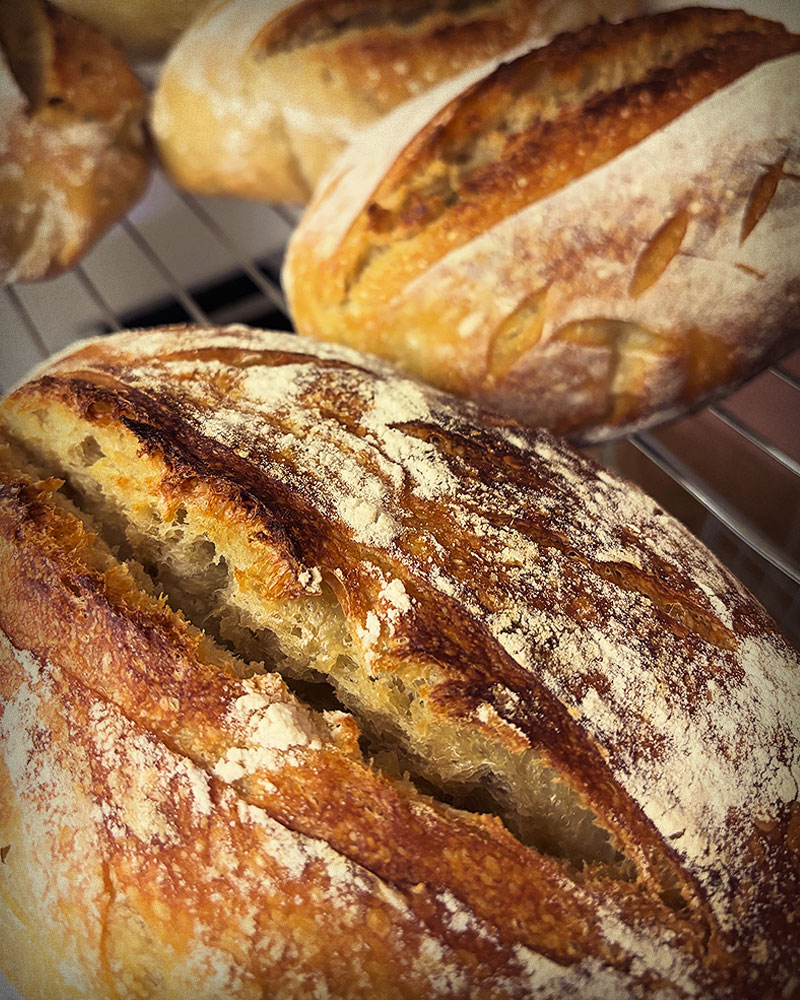
By late afternoon, I shape all the dough and add in any flavors for each loaf at that time. The loaves then head into a proofing basket and will cold proof in the fridge for several hours before I bake them Tuesday evening. Since that classic crispy sourdough crust would get soggy and gooey if I packaged them up before they are fully cooled, trapping in the heat/steam from the bread inside the bag, I let them cool overnight on a baking rack and pack them first thing in the morning on Wednesday — ready for you in the farmstand!
What makes sourdough different from any other dough? As it turns out, EVERYTHING! While modern cooking techniques have streamlined the timeline for baking bread with the advent of instant or rapid yeast, allowing for baking of bread from start to finish in about 2-3 hours, transitioning away from slow fermentation has some negative impacts and loses some of the art of bread baking.
In slow fermentation, like with sourdough, no yeast is added to the dough. Instead, natural yeast in the air slowly interacts with the flour and water and performs a slower rising (fermentation) process. This slower fermentation not only enhances flavor (and is responsible for the tangy sourdough flavor you have grown to love), but it also allows the structure of the flour proteins to develop differently.
Because of the slower fermentation, the wheat grains are more readily able to be processed and digested by our own bodies, making the sensitivity to wheat (like bloating or IBS) less prominent or eliminated altogether. Like whaaaaatttt?! Furthermore, when using fresh-milled flour from whole grains (I use hard red wheat), you get back the nutritional benefits that are present in the bran and wheat germ that get stripped and bleached in commercial flour preparation.
From start to finish, a loaf of sourdough takes about 2.5 days. It’s not a quick bread you decide to make on a whim — it takes planning and preparation to bring that artisan goodness from my kitchen to yours! First, I have to make sure I have an active sourdough starter, where the yeast is alive and thriving and makes everything all bubbly. If I want to have bread available in my farmstand on, say, a Wednesday morning, I must feed my starter Sunday evening, as it takes about 24 hours for it to activate to my desired level. Based on pre-orders or how much I’m wanting to bake, I’ll have to activate enough starter to bake all the things. It’s also why my cutoff for bread pre-orders is on Sunday or Wednesday evenings.
Then, on a Monday evening, I mix all the dough together and perform several rounds of stretch-and-folds over the next 90 minutes to develop the wheat gluten and aerate the bread. I then cover the bowl and let it rise in the fridge overnight. I use a cool bulk fermentation so that it doesn’t overproof on me if I let it rise on the countertop overnight. On Tuesday morning, I take it out of the fridge so it can warm to room temp and finish out its bulk fermentation during the first half of the day.
By late afternoon, I shape all the dough and add in any flavors for each loaf at that time. The loaves then head into a proofing basket and will cold proof in the fridge for several hours before I bake them Tuesday evening. Since that classic crispy sourdough crust would get soggy and gooey if I packaged them up before they are fully cooled, trapping in the heat/steam from the bread inside the bag, I let them cool overnight on a baking rack and pack them first thing in the morning on Wednesday — ready for you in the farmstand!